Innovation
Research that ends up in the field.
This is where our research and development lives, from active experiments to systems already in operators' hands, and how each one has matured along the way.
We invest in the problems others park as too hard, and we run our own R&D to work them out. Some of what you see here is still in the lab; some has been trialled, hardened and fielded. What ties it together is a way of working: prove the difficult part first, test it against the real environment, then keep developing it until it holds up where it matters. That is how an idea becomes something people can rely on.
SENTIA
Assured decision support, from sensor to commander.
From commander’s intent to decision in six stages. Every step can be traced, and a human sets how much the system does on its own.
Hover, tap or use the arrow keys to explore each stage and the Anywise products behind it.
The setting is chosen per task and changes as complexity, scale, resources and risk change.
- AutomatedThe system acts. A person checks a sample of its work.
- Human-on-the-loopThe system proposes and acts. A person approves key outputs and handles exceptions.
- Human-in-the-loopA person directs and decides. The system assists.
Routine work can run automated. A novel or high-stakes call goes back to a person.
Our other innovations
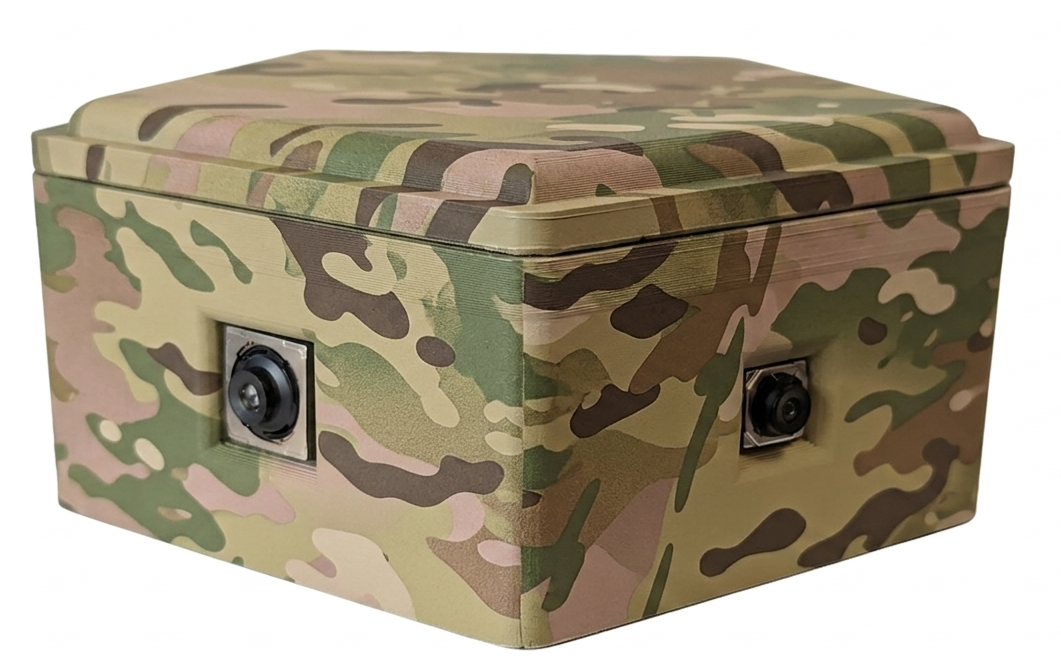
Sensing & vision Fielded · TRL 5
Eyes and ears where power and comms run out
The places that matter most are often the ones you can't watch: no power, no network, no easy access. We field small, low-cost sensors you can deploy in numbers and leave in place, turning those blind spots into a live picture you can act on. Each configuration is built around the problem, not the other way round.
For: anyone who needs to know what's happening somewhere they can't reach, power, or connect.
SWIFT Demonstrated to Army at AID26 Presented at ADSTAR & ASCA
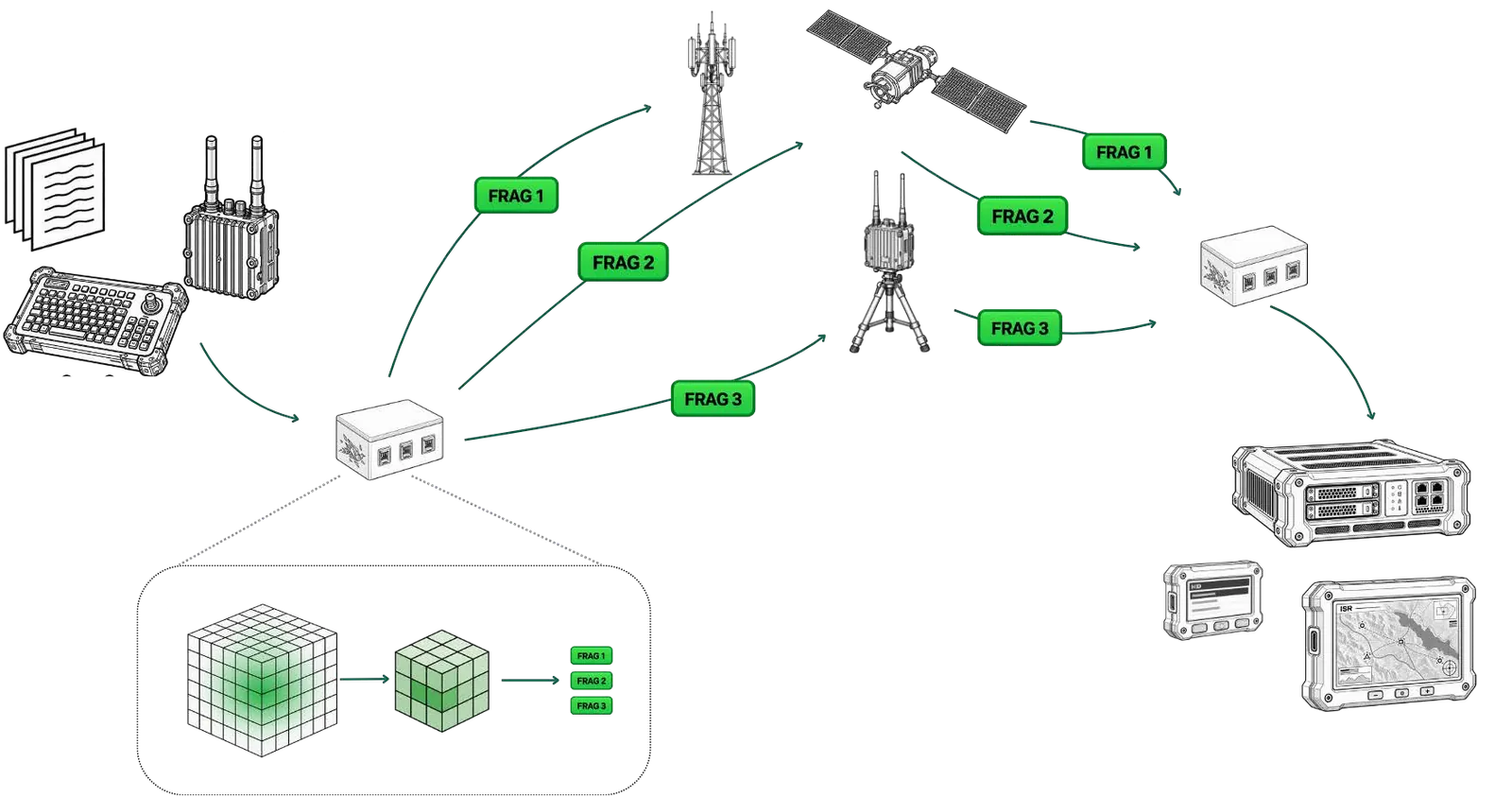
Sovereign multi-bearer message fragmentation
Communication dies on a single channel. SWIFT compresses data from any source and fragments it across every available bearer, so no single frame holds the message and it gets through when links are jammed, degraded or denied. A thirty-second voice SITREP becomes milliseconds of data, and it sits on the tactical radios you already field.
No bearer carries a whole message, and the fragment distribution changes every send.
A bearer can die mid-send and the message still arrives, with no required operator action.
Assured Connectivity Active R&D
Data that reaches where nothing else can
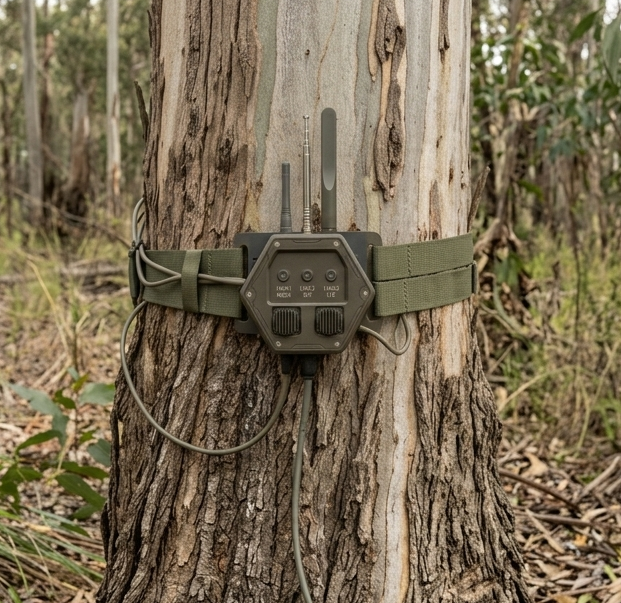
Some environments defeat conventional communications entirely: too contested, too remote, too much in the way. We're engineering prototypes that use every available slice of spectrum and heal their own networks around lost nodes, pushing data through obstacles and keeping it moving when everything else drops out. This is where we're pushing the edge next.
Not tied to one bearer or band. Whatever gets the data through.
Reroute around lost nodes automatically. No single point of failure.
For: operations in places where "no signal" isn't an acceptable answer.
Have a problem that looks too hard? That's usually where we start.