Capability 03
Asset Management.
Buying the capability is the easy part. Keeping it is not.
Complex platforms spend decades in service, and most of what they cost is spent after delivery. We work on the part that decides whether a capability stays available: the engineering, logistics and monitoring that keep it supportable long after the acquisition project has closed.
The problem
Sustainment is where capability quietly erodes.
Acquisition gets the attention and the governance. Sustainment gets whatever is left, and it is where availability is actually won or lost, usually through decisions made years earlier about supportability that nobody revisits.
By the time a fleet's availability starts slipping, the causes are structural: incomplete technical data, maintenance driven by the calendar rather than condition, and no reliable view of how hard each asset has actually worked.
-
01
Support designed too late
Supportability treated as a delivery afterthought rather than a design constraint, locking in decades of avoidable cost.
-
02
Calendar-based maintenance
Servicing to a schedule rather than to condition means doing work that isn't needed and missing work that is.
-
03
No usage truth
Without real usage data, fleet decisions rest on assumptions about how hard each asset has been worked.
-
04
Technical data debt
Publications and configuration records that drift out of step with the fleet make every later decision slower and riskier.
What we do
Design for support, then manage by condition.
We work across the whole life of an asset: building the support framework up front, instrumenting the fleet so its real condition is visible, and using that evidence to drive maintenance and investment decisions.
Build the ILS framework
Support concepts, maintenance policy and technical publications developed so the system is supportable by design, not by heroics.
Instrument the fleet
Health and usage monitoring gives you what each asset has actually experienced, rather than what the schedule assumed.
Predict, don't react
Condition data turns maintenance from a fixed cycle into a forecast, so intervention happens before failure rather than after it.
Close the engineering loop
Findings feed back into technical data and support policy, so the fleet gets easier to sustain over time instead of harder.
Platforms & services
What we bring to asset management.
Support engineering services alongside the monitoring and intelligence platforms that make condition-based decisions possible.
Logistics Intelligence
ILS
We develop integrated logistics support frameworks and technical publications that keep capabilities operational long after initial delivery.
→ Supportable through life
Learn more
Bridge Health & Usage Monitoring
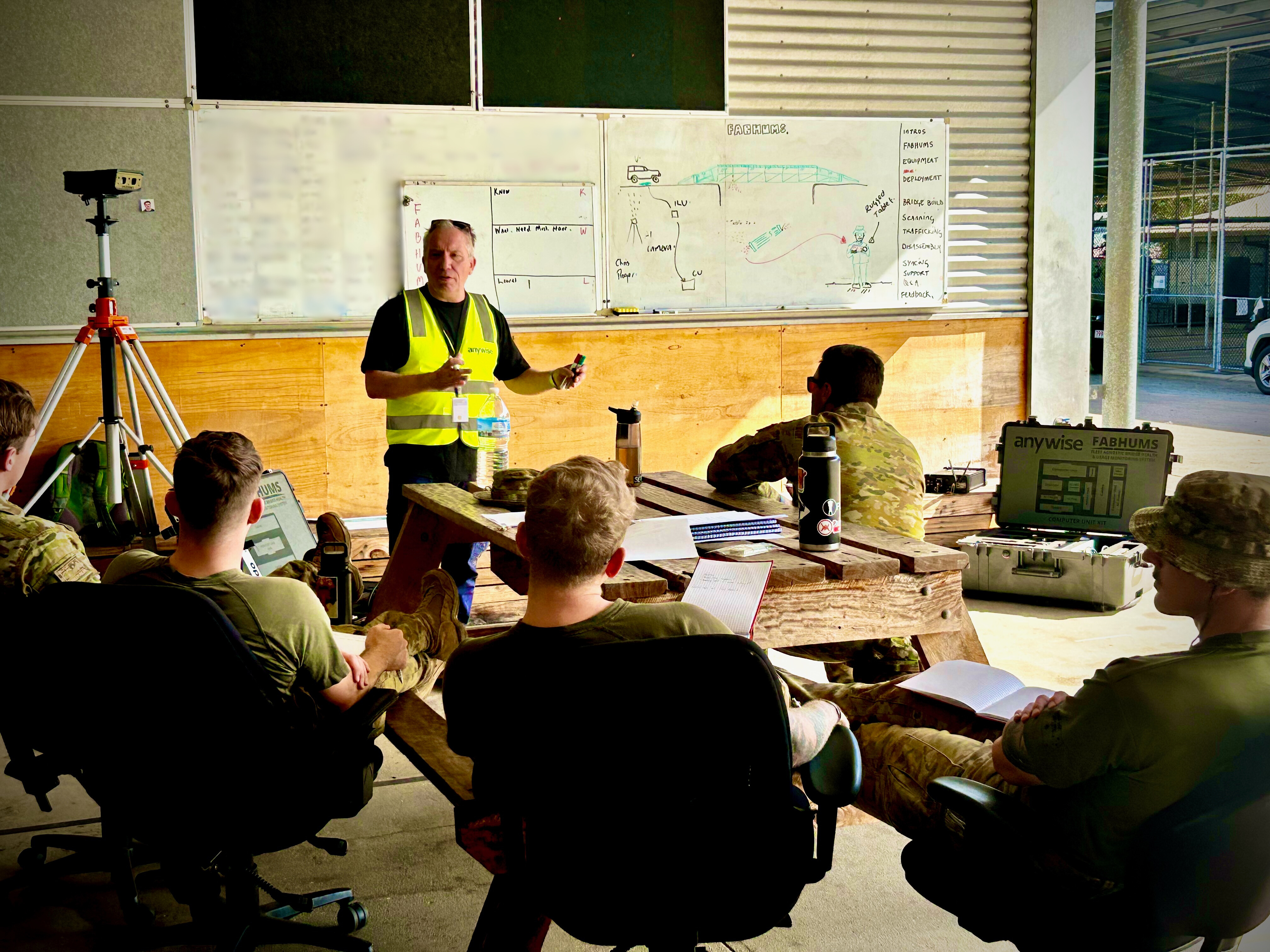
FABHUMS
Bridges managed at the component level, with usage-based maintenance that cuts lifecycle costs by up to 40% and extends service life by up to 25% (estimates).
→ Safer, smarter bridging
Learn more
Military Engineering
ENG|AIDE
Digital bridging guidance with one auditable record from tasking to disassembly, fed by real-time bridge health data from FABHUMS.
→ Operational with the Australian Army
Learn more
Facilities Intelligence
CAMP|AIDE
Estate and facilities management for complex, multi-site operations, where the asset base is the infrastructure itself.
→ Faster planning, safer outcomes
Learn moreAvailability slipping on a fleet you can't take offline?
Tell us what you're sustaining. We'll show you where the recoverable cost sits.